JILL AND SHELDON BONOVITZ, PHILADELPHIA – MEET THE COLLECTOR PART SEVENTY Three
I have been trying to interview Jill and Sheldon Bonovitz for a couple of years… ever since John Ollman showed me their Philadelphia home and Sheldon’s office within Duane Morris a couple of years ago – but alas they were both out of town! It was a treat to revisit the house in-person and to get to learn a little more about their collecting habits, pieces they’re still after and the legacy of their collection when they’re no longer with us. It is mainly focused on American artists, with a handful of European works thrown in. Read on for part seventy-three of my Meet the Collector series, and to hear more about an incredible collection of art spread across several spaces in America.
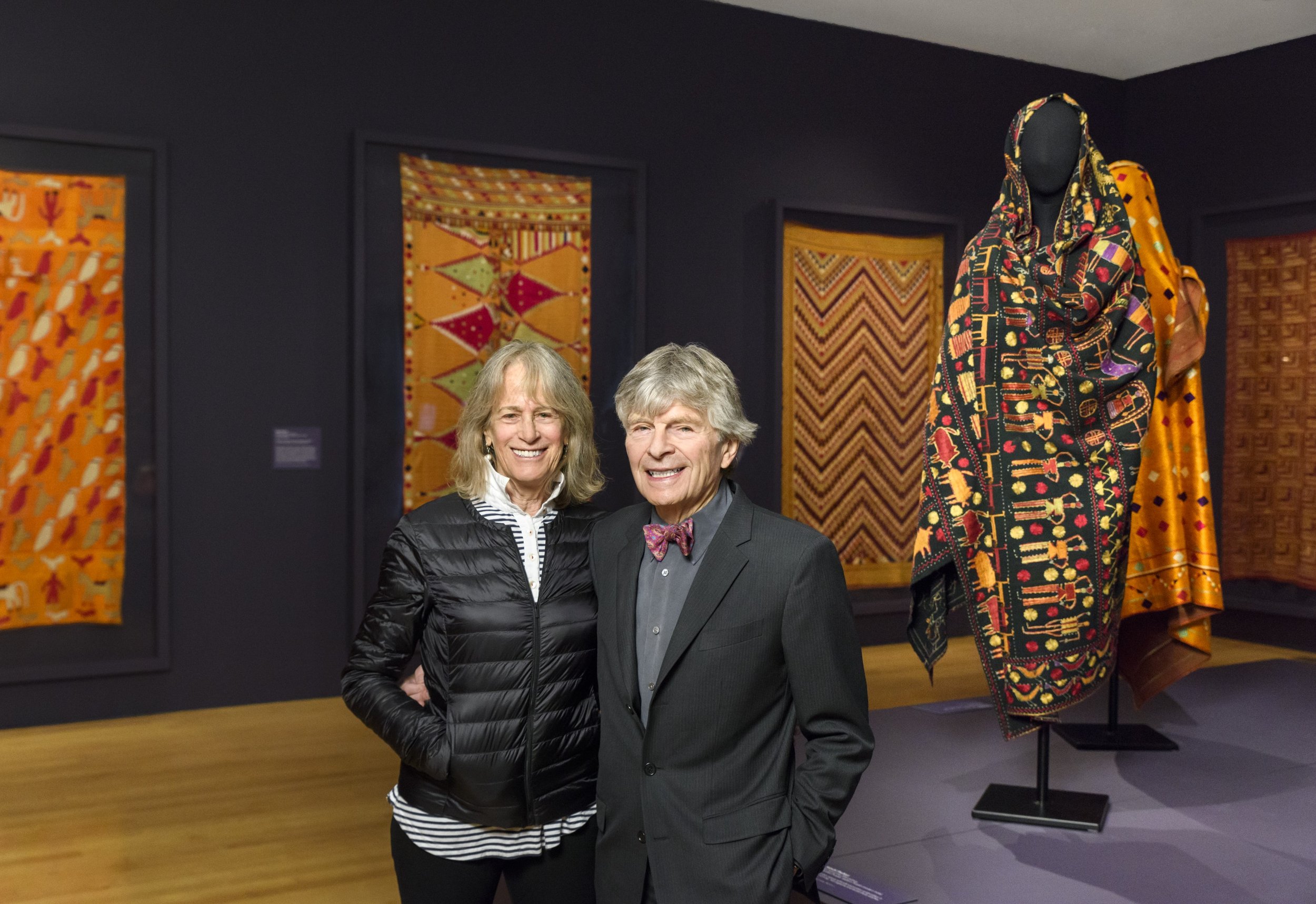
Jill and Sheldon Bonovitz at their Phulkari exhibition 2023/24
Jennifer: Let’s start by chatting about your backgrounds, Jill you first.
Jill: I'm an artist. After college, I was teaching neurodivergent children as I was getting a degree in special education. I loved working with the kids amongst their art. Then, after I got married, I went back to art school, and started the Clay Studio with four other people from the Moore School of Art, and I've been doing my own art since. But obviously I love outsider art also.
Jennifer: And you Sheldon?
Sheldon: I'm a lawyer, and I grew up with no art in my family. I went to college and just took one fine art class. I really got interested in art when Jill and I met and married, and we’ve spent our whole lives on weekends and during the week going to museums and galleries. Then, about the same time as we were married, outsider art was beginning to be noted. We went to a show in 1982, the Black Folk Art in America show and we were really moved by it. We can't say, well, let's focus on this art now as we didn’t, but over time we did, and people refer to us as collectors. It was such a new field, that we weren't really, you know, collectors by any standard at that time. From then on, we decided to focus on this material, with a couple of diversions though!
Jennifer: Sheldon, you said you did a fine art course, do you still make any art?
Sheldon: No, I am totally incapable of making art.
Jennifer: [laughter] Okay. So, if you began collecting outsider art in 1982, how many pieces do you think are in your collection altogether approximately?
Sheldon: Well, if you exclude the Purvis Young’s which we have just gifted to local schools for educational purposes, I'd say 800 or 900 pieces. 200 are committed to the Philadelphia Museum of Art Museum, then we have another 600 or 700 pieces.
Jennifer: Are they all on display or are some in storage, as your hang is your house is quite minimal? I know some are in the Duane Morris offices where you work Sheldon.
Jill: Some are in our place next door, some at our Shore house, and our New York apartment. We don't have any in storage. I mean, if we can't see it, you know, I don't see why we would own it.
Jennifer: A great attitude to have.
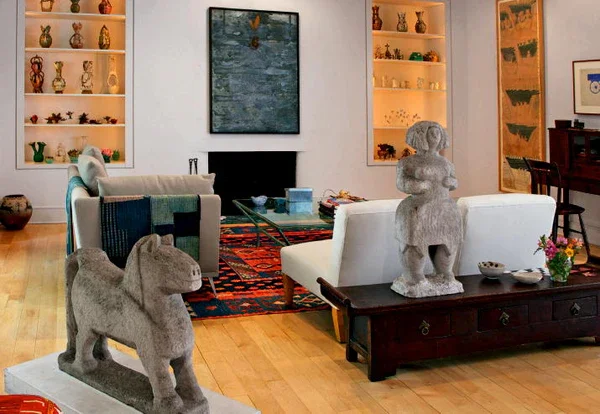
Installation photograph from the living room of Jill and Sheldon, with Jill’s mother’s Anselm Kiefer above the fireplace, and two William Edmonson works in the foreground
Jennifer: I believe you still collect right?
Sheldon: Yes. We don't think about where we're going to put it, or do we have room? We just buy what we like.
Jennifer: So, you haven't got like an eye on anything in particular or are thinking there’s a certain artist that you still want to add to the collection? It’s just about what attracts your attention that day right?
Jill: Yes, it’s about if we see something. We don’t feel like we have to own all the outsider artists in this field as we aren’t drawn to them all. So we are not trying to fill gaps in that respect.
Jennifer: Sheldon, when I saw your office space, I was really interested to know what the other people in your offices think of the work hanging in there. So, when you first hung it, were they like what the hell is this?
Jill: Some were [laughter from all].
Sheldon: It’s become somewhat iconic. People in the office know that we have a lot of groups and others coming through the collection at the offices to see it. Of course, if I hung something there and people didn’t like it, we wouldn't hang it.
Jennifer: Did the art spill over to your offices because you felt like you ran out of space in your home, or had you always wanted to have artwork there too?
Sheldon: Well, we have 30,000 square feet on my floor. The firm did acquire art pieces directly, and some is ours.
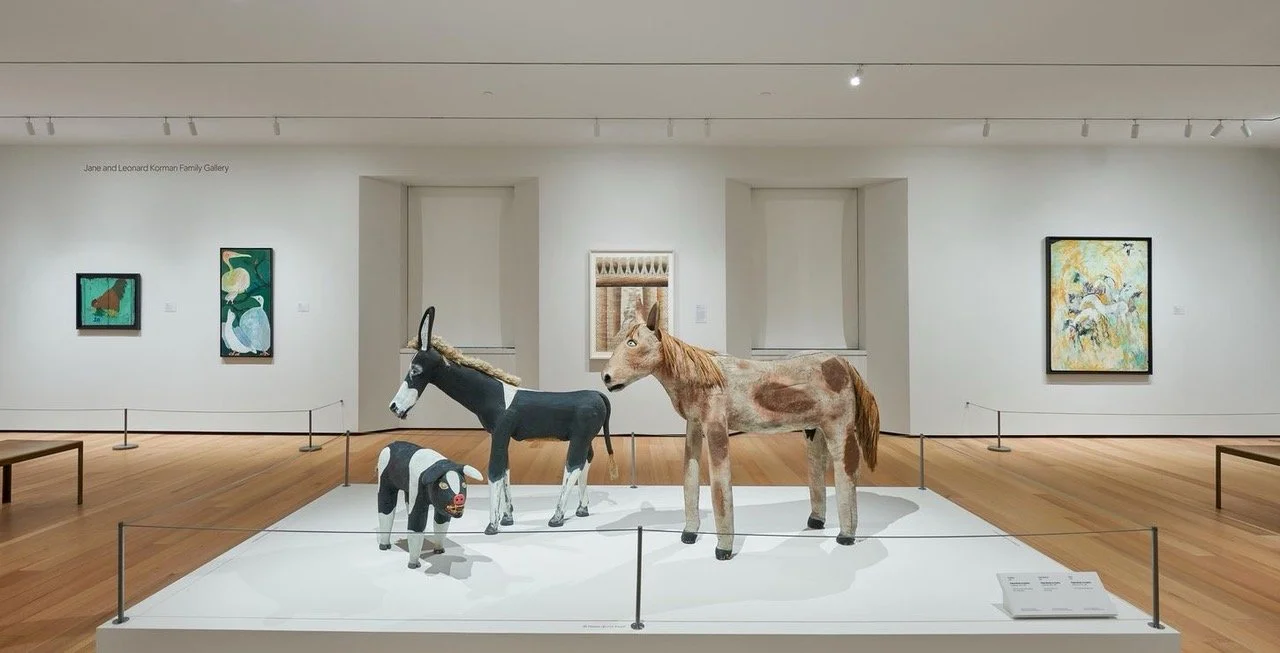
Installation photograph of ‘Great and Mighty Things’ at Philadelphia Museum, 2013
Jennifer: You mentioned that you had your shows in Philadelphia. You've had two shows, haven't you, both at the Philadelphia Museum of Art?
Jill: Yes. One was 2013. And one was 2023- 2024 – it was on 14 months.
Jennifer: And there were different works exhibited each time right?
Jill: Essentially, yes. There were a few that were carryovers, but the shows had different curators, and each curator had a different approach.
Sheldon: We had two other shows at the Museum of our textiles from India, Phulkari and Kantha.
Jennifer: Wow, okay. Did you approach them, or did they approach you and say, we want to do a show of your collection?
Sheldon: Well, the one in 2013, which was a very big show, I’d been talking to Anne d’Harnoncourt about it, and she was the Director at the time. But honestly, I'm not sure how it happened, but she loved the material. Sadly Anne passed away and Timothy Rub succeeded her, who we negotiated the terms of the second show with. It was a very important show because Roberta Smith, I think she said it best… that the walls of the Museum had come down by opening itself up to this material. But I'm just not sure, and I don't think it really matters.
Jennifer: And you said it was successful, and it had a lot of visitors?
Sheldon: Oh yes, we had 73,000 visitors. And lots and lots of school children. And lots of press. We were reviewed by just about every major paper: the Financial Times, the Wall Street Journal, and the New York Times had a very big article.
Jennifer: Well, that's amazing, that's what you want right?
Jill: That was amazing. We were also on Good Morning America. That was fun.
Jennifer: Love that!
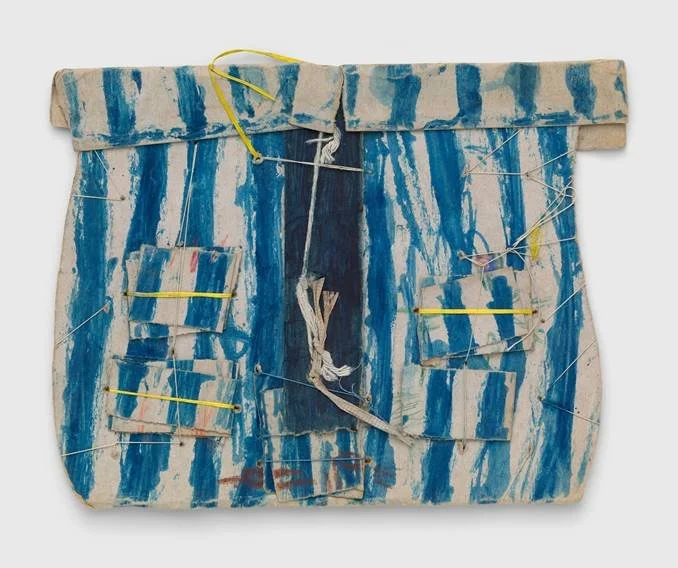
James Castle, Untitled (Blue Vessel), 1950, pigment and string on found paper, 8 x 10.5 in (20.32 x 26.67 cm). Jill mentions that Castle’s assemblage works are some of her favourites
Jennifer: What was it like when all the work went to these shows, did it feel bare in here and your offices?
Jill: Well, we had a chance to paint the interior of the house, so we didn’t mind too much!
Jennifer: Funny! Did you help select the work for the shows, or was it purely the curators decisions?
Sheldon: Yes. Anne Percy and Cara Zimmerman did the first show, and Cara wrote some of the bios of the artists and helped to promote the show too.
Jennifer: Great. Would you say, and this is a difficult question, you've got a favourite artist in the collection?
Jill: I would say we have a few of them. It's more, I have certain pieces that are favourites. Like the blue runaway goat cart by Bill Traylor. And the James Castle assemblage, I really love that. [Both of these pieces hang in the living room we were sat in]. I mean, I like everything. We have the things that we both love the most here. And there's some Bill Traylor’s upstairs that I really like too.
Jennifer: And what is it about his work that you're drawn to?
Jill: There's a simplicity that I just respond to. It's the same with Castle. I like his constructions more than his drawings.
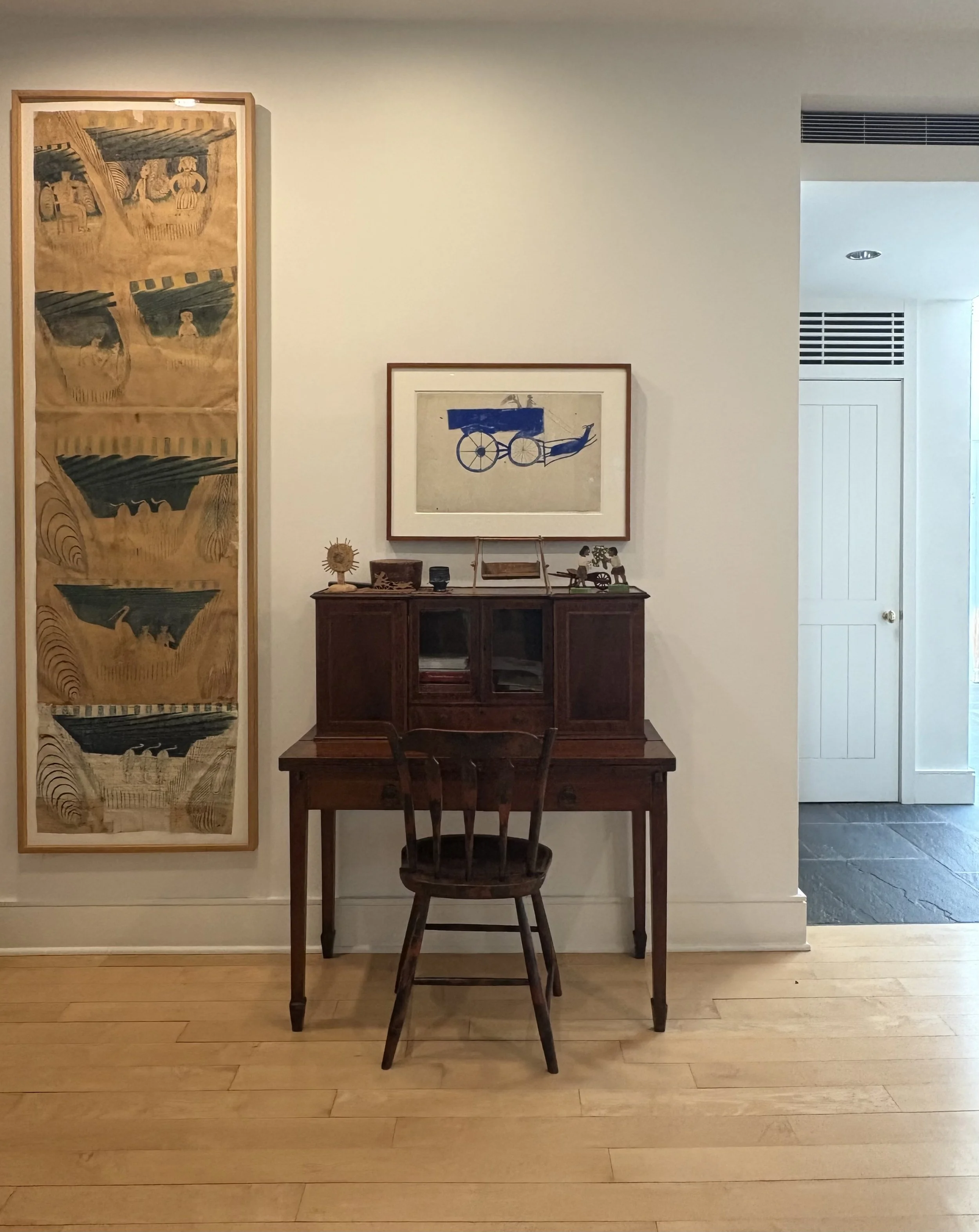
Bill Traylor’s runaway goat cart that Jill mentions alongside a large Martín Ramírez
Jennifer: What about you Sheldon?
Sheldon: I think I'd say Edmondson is my favourite artist. This is a line I've used before, and I did it spontaneously at the time years ago. Somebody asked me my favourite artist, and I mentioned my favourite piece of work being an angel we have upstairs on a credenza overlooking us in the bedroom and I said at the time: “so now at night I sleep with two angels.” [aw] I repeat that a lot, but initially, it was spontaneous.
Jennifer: And what is it about his work that you are drawn to?
Sheldon: I think it’s just the skill that he has creating this work out of limestone, and some of the expressions on the faces. Like the one with the almost sphinx-like head we have (in the living area), they’re unusual. He was a great stone carver, really great. So I’d say him, and I’m with Jill too, as I really do like Castle and Traylor. I like almost every Traylor in varying degrees, and every Castle, probably in varying degrees too. But William Hawkins, I might like eight or ten per cent of his works in total. I'm not totally crazy about his collages. But when his work is spot on, it is really terrific.
Jennifer: So, you seem like you're not just focussed on like, drawing and painting, you collect all sorts, like sculpture, textiles etc, it doesn't really matter?
Jill: Yes, a lot. Then there’s Eugene von Bruenchenhein that I love. It’s interesting to me that I love him so much because I love the minimal… I'm really a minimalist, and his work is totally not that. But I do love it.
Jennifer: Is it just this style [points to the bone sculptures in the living room area], or do you like his really brightly coloured painted works?
Jill: I'm not as crazy about his painted works. I like the crowns, and the bone pieces.
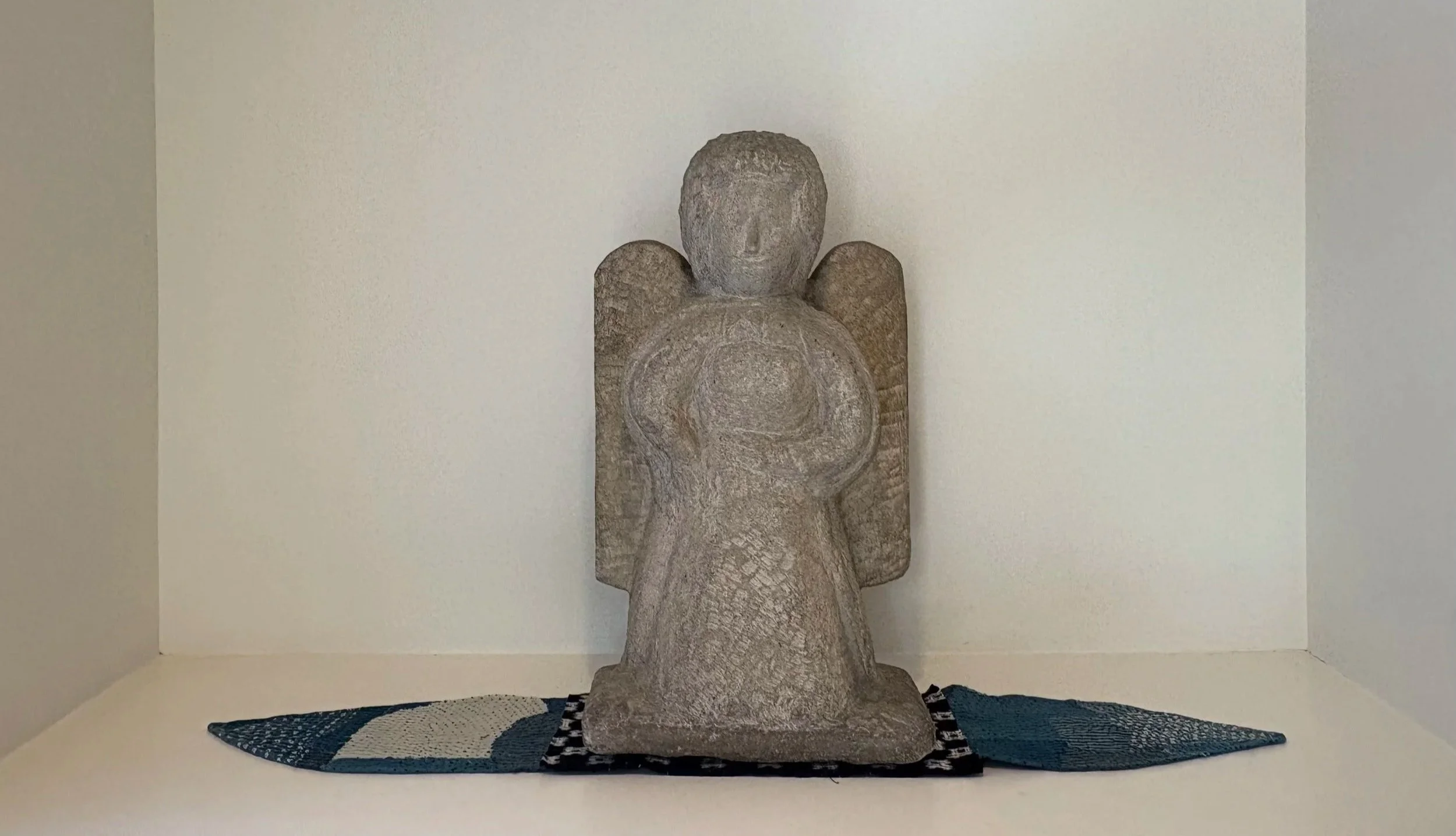
The William Edmonson ‘Angel’ that Sheldon mentions, that is housed in the bedroom
Sheldon: Also, we like Martín Ramírez very much. The interesting thing about von Bruenchenhein was that Carl Hammer represented the estate of von Bruenchenhein. He bought half the works from the artists house when he died. With the paintings, photographs and sculptures, half went to the Kohler Center and the other half went to Carl who sold it. And he sold really well the paintings and the photographs, but he wasn't selling the sculptures at all. So, we bought the whole collection of them. And we gave a lot of it to museums.
Jill: We've given away a lot of art. As mentioned earlier, we’ve given a lot of Purvis Young’s work to museums and schools and colleges.
Sheldon: We gave 130 public schools in Philadelphia five works to each for hanging. Logistically, it was difficult. It was to all the schools that had art departments, and they had to want them.
Jennifer: Oh, really? That's amazing.
Sheldon: We gave work to the National Gallery and the Studio Museum in Harlem, and we have given the Rubell Museum a lot of work.
Jill: Yes, and certainly with Purvis Young’s work, it's more than we could deal with or show, and we want people to share the beauty.
Jennifer: Fantastic. Do you remember what the first work of outsider art was that you bought?
Sheldon: It was William Hawkins’ ‘Yaekle’ building. It’s in our book about our collection. It's a building in Columbus where he lived. It was from like a store selling folk art. And this was hanging above an open door. And I said, I would like to buy that work, and she was a surprised by that. That was the first piece ever.
Jennifer: And you still have that piece right?
Sheldon: Yes. It's in our office, and it's in that book [pointed to a table with a book about their collection].
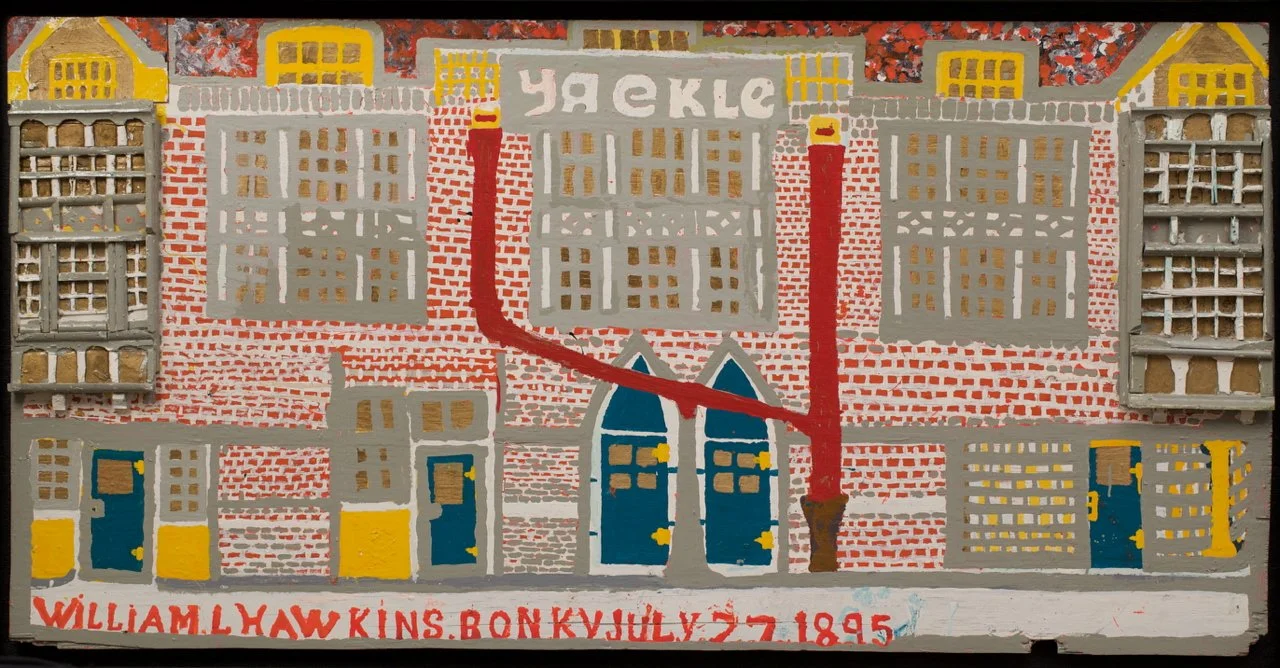
William Hawkins, Yaekle Building, paint on board, 34 x 69.5 in (86.36 x 176.53 cm)
Jennifer: I wonder, did you ever go around visiting any of the artists when they were alive? As several collectors I interviewed in America did.
Jill: No, no. That wasn't something we wanted to do. I know people ask us this all the time, did we just get in a truck and drive down and meet the artists? But no, we never did it.
Jennifer: You just didn't want to, or it just wasn't your way of collecting?
Sheldon: A combination of things, like you're almost taking advantage of the artist in a way. Like with David Butler, for example. It almost drove him crazy because people would come to his house and wanted to take work from the garden and all of his metal sculptures. I'm not sure how comfortable I would have felt buying this art in this way. Especially if you knew that the artist was represented by a gallery, then it wouldn’t be fair.
Jill: Also, it's just not our style you know. When we started, it was really just galleries, but now it is also auctions too.
Sheldon: Or galleries and private dealers.
Jennifer: Is there any artist that you've never bought but where you are waiting for that one that you think I really want?
Jill: I would have one person… Judith Scott. I've never seen one that I loved enough. I mean, I want to really like it. And the one I loved, was one they wouldn't sell which was at the Brooklyn Museum show. It was made with paper towels, and it was just so fragile, so they wanted it to go to a museum. So now I am particularly looking for a white one, and that love is partly based on that one with the paper towels, but I just haven't found that one since.
Jennifer: And Sheldon, is there anything that you're always looking for?
Sheldon: No. I always thought I'd like I'd like to have a nice Thornton Dial, and I've never found one. We never found really a nice Darger. I have Thornton Dial’s and they’re okay and I have a Darger in my office, but they're not really ones that I love. Now that piece [points to a wall with a large Christ’s head on it] is not outsider art. I saw that at first in a gallery. It was in Larry Mangel’s Gallery, and I didn't buy it. I regretted it, but several years later, I saw it hanging in somebody's house who was having a party and I said to Larry, who was an art dealer, “Larry that was a piece I really wanted to buy, and I’ve regretted it ever since.” And he said, "Well, I own that piece and it is on loan to this family, because they have some work that's out on loan, so I loaned it to them.” So, he let me buy the piece then.
Jennifer: How brilliant!
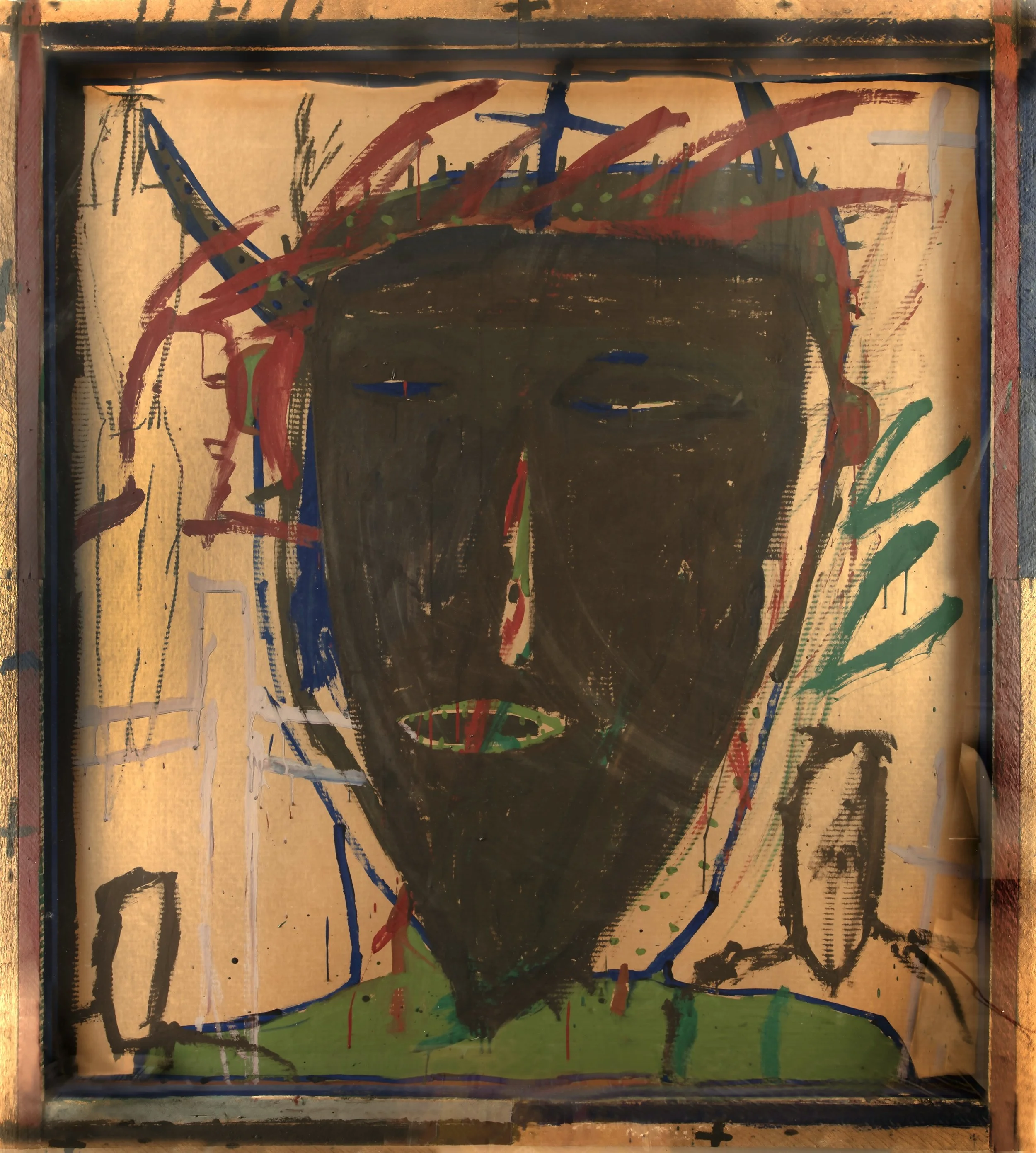
James Brown, Untitled (Head/Christ), paint on mixed media, 80 x 80 in (203.2 x 203.2 cm). Sheldon mentions this Christ’s head that hangs in the living room area.
Jennifer: So that is by a trained artist - how many trained artists have you got in your collection? I don’t think it’s many from what I can see?
Jill: Well, that piece [the Christ] and the Anselm Kiefer that hangs over the fireplace. It was my mothers and when she died, we bought it from the estate effectively, as I grew up around it, so I wanted it.
Sheldon: On the stairwell is piece done by Margaret Wharton… she's a trained artist. It's a chair sliced in five pieces and hung on the wall. And then we have a couple of other pieces upstairs. So, like a handful. And we have a bunch of pre-Columbian pottery, and that's going to the University of Pennsylvania Museum. We like things to go to other collections or museums that would appreciate it.
Jennifer: You’ve planned for works to go to the Philadelphia Museum of Art, are there plans for works to go to other places too?
Sheldon: Well, that’s defined yes. I mean, it's really circumscribed in that book [the great and mighty collection book from the exhibition]. Our thinking now is to package the work in groups of 20 or 30 pieces and give it to museums who wouldn't otherwise be able to get it or buy this work. So, to smaller museums throughout the country that would appreciate it, and use it as teaching tools.
Jennifer: Yes, that's important. And would you ever have another book done, or do you feel like this one book was enough for you and that's all you need?
Sheldon: You know, we started with that book, but we keep buying art, so it almost becomes out of date. This book was from our first show, and the museum didn’t want to do a catalogue for the second show. I said I would have paid for it, but they didn’t want it. Even though they kept the work up for a long time, nearly 14 months.
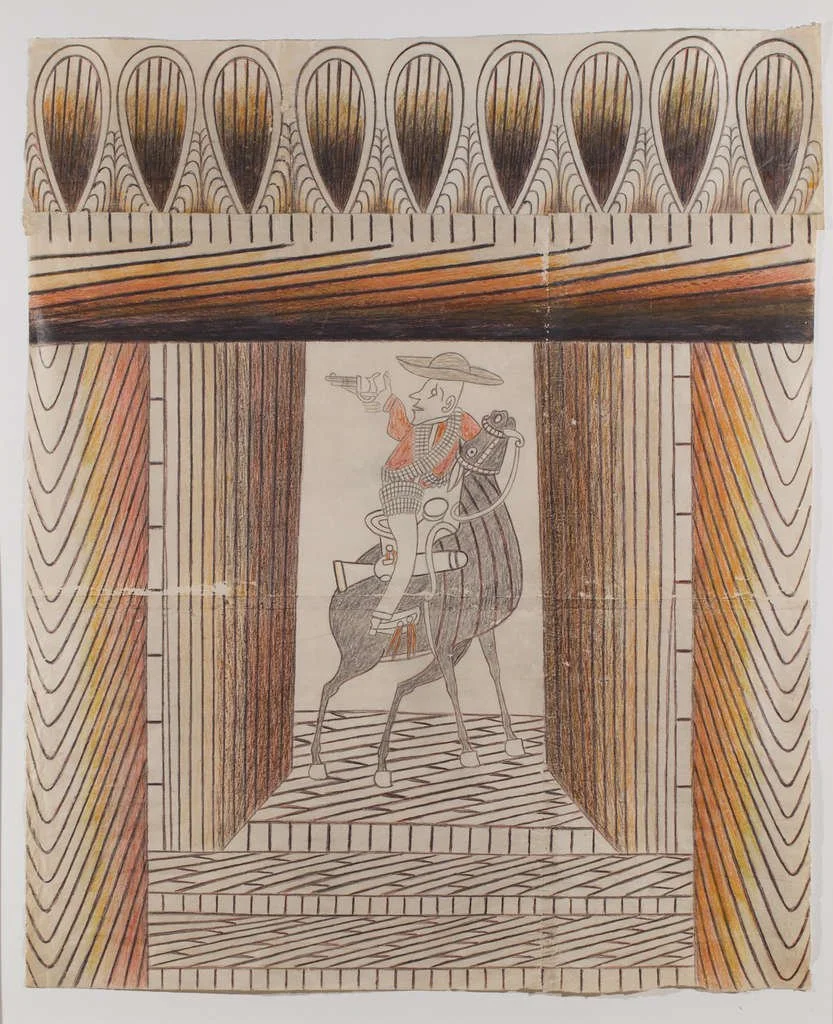
Martín Ramírez, Cabillaro (horse and rider)
Jennifer: So earlier you said the 1982 Corcorran show was the one that kind of got you onto this art, have there been any other shows over the years that you think have been really important?
Sheldon: Well, Jill’s mother showed this work, and she had a fantastic Howard Finster show, but didn’t sell any. So, she bought all the work there, but the only piece we have from that show is the train over there. There was a fantastic show of William Edmonson and Bill Traylor at the Menil Museum in Houston.
Jill: Yes, the Menil show. It was the same show that was at the Studio Museum of Harlem, but it didn’t look as good there as I think the pedestals were too rough for the work. But at the Menil show, it was just spectacular. I think when you have these big encyclopaedic shows, it's hard to pick things out.
Sheldon: There was the Joseph Yoakum show at MoMA which started in Chicago, and a big Castle show that started in Philadelphia and went to the Arts Institute in Chicago. That was a nice show.
Jennifer: Do you loan to a lot of shows?
Jill: I wouldn’t say a lot. If they're important shows, we do. But we loaned to the Castle show and produced the film for it.
Jennifer: Are there any individuals in this field that you think have been pivotal for making it the success that it is?
Sheldon: Phyllis Kind very definitely. John Ollman. I think Carl Hammer, Frank Maresca and Roger Ricco, Shari and Randall of Cavin Morris Gallery, and Andrew Edlin has been very good for the field.
Jill: And now New York galleries are getting interested too like David Zwirner and Hauser and Wirth. They're getting on the bandwagon, which is great.
Sheldon: But they are picking out a select few. But they recently had a show of Jon Serl at Zwirner too which was quite an unusual pick. It's interesting that the work really hasn't gained a widespread interest on the West Coast. It's hard to pick out a gallery in the West Coast that shows this art, but maybe we just don’t know about them.
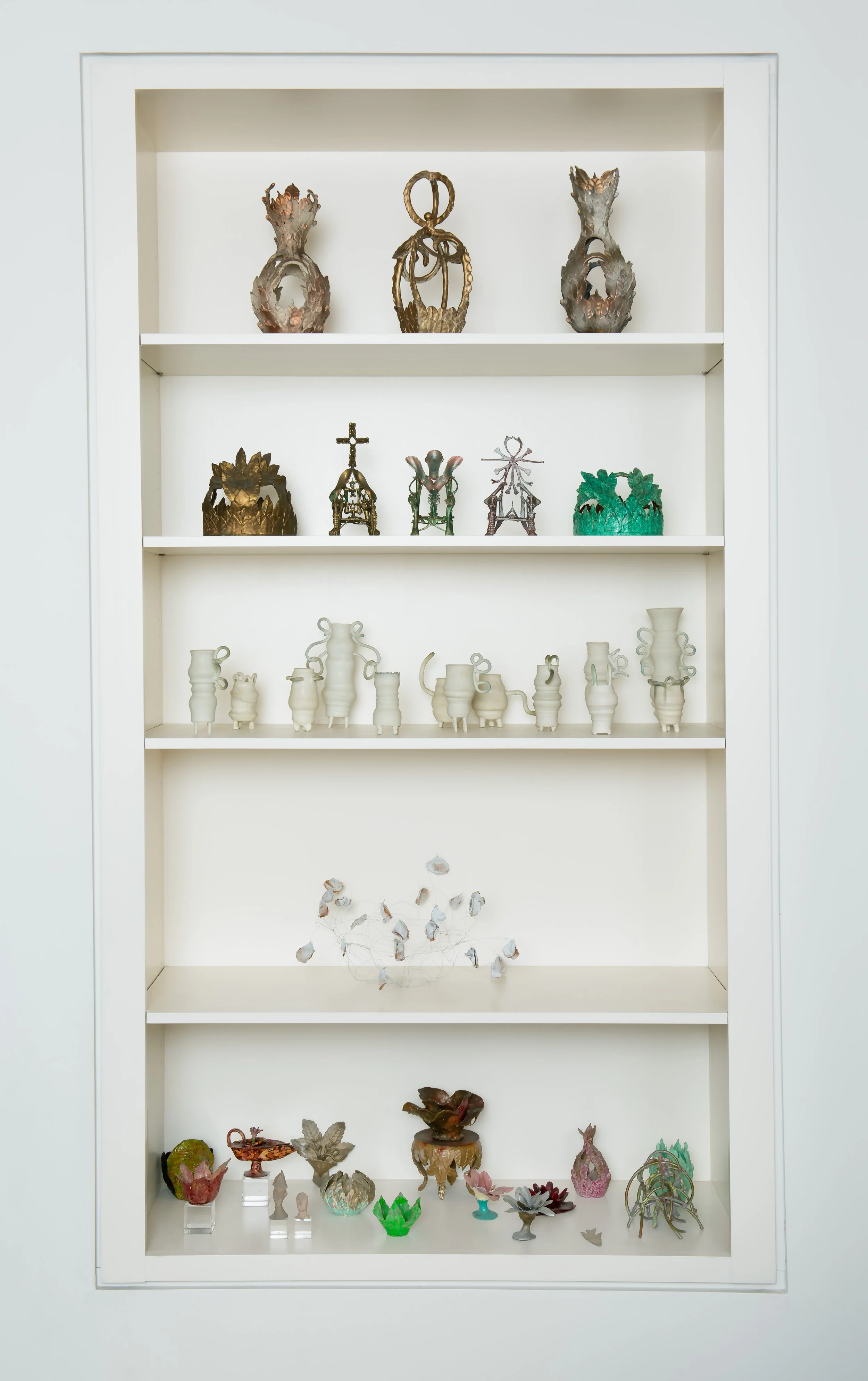
EVB (Eugene von Bruenchenhein) bone works alongside Jill’s own artworks. Photo by John Carlano
Jennifer: Jill, you make your own ceramics. Would you say that you are ever influenced by this art when you make your own ceramics?
Jill: You know, I think without realising it, I am. Because I've done a lot of those porcelain vases. A lot of them. And even though they're far away from von Bruenchenhein, but I think subconscious and consciously, you know, seeing this art every day, I think it seeps in. But also, I do work in wire, and some art may have been influenced by this art too.
Jennifer: And then you've set up the Clay Studio too in Philadelphia – tell me about that? And why did you set that up?
Jill: Well, when I went back to art school, when I had young kids, after taking all the possible courses, and I actually had enough courses to go to graduate school. Which I was going to do, except our teacher of ceramics there and some other students, there were five of us, we started looking for a studio together because we were leaving school and he was getting a divorce. So, I went with them to find a studio, and we found this wonderful big loft building. But it was way too much for just the five of us. So, we talked about how we could make it work, and bringing in other artists and having lots of kilns and that’s how the Clay Studio started. That was my graduate school.
Jennifer: Love that. And it still runs now, doesn't it?
Jill: Well, they've just built an incredible building and about two years ago it opened, and it's just state of the art, it’s unbelievable. All for ceramics.
Jennifer: Great. And so your mother had the Janet Fleisher gallery, and so that originally obviously didn't show self-taught art did it?
Jill: Not originally, but pretty soon after. They opened in the 1950s and it was her and another woman, a friend of hers.
Sheldon: It was called The Little Gallery because they just sold work under $100.
Jill: That was their very first space. And then they realised that that wasn't going to pay the rent. So, they gave up that idea, and they moved to a larger location. And it was pretty soon after that that John Ollman started working there.
Sheldon: And that’s the only job that John ever had. Jill’s mother very eclectic in her taste. She showed work everything from Picasso, to Alexander Calder to Indian Navajo, to really great Australian aboriginal dreaming paintings.
Jennifer: So, what was it that turned her eye onto outsider art? Did she see some in a show somewhere?
Jill: I don't really remember.
Sheldon: She also had a gallery in Paris, which closed after ten years, and simultaneously ran the one here. It was called Galerie Philadelphie, but in Paris.
Jill: Well, it was a whole different thing. There was a wonderful French woman Jacqueline running it. But you had to do things differently. I think they had to pay a certain amount of money to the artists to keep them in the gallery, so it closed in the end.
Jennifer: And you didn't ever want to get involved in the gallery Jill?
Jill: Well, one summer, my sister and I went with Jacqueline, who was running the gallery, to the south of France and they opened just a summer gallery there. And my sister and I were there, but you know, Jacqueline really ran it. But I never really wanted to get involved, I wanted to make art instead.
Sheldon: And I was the one who was more involved, but from a business standpoint.
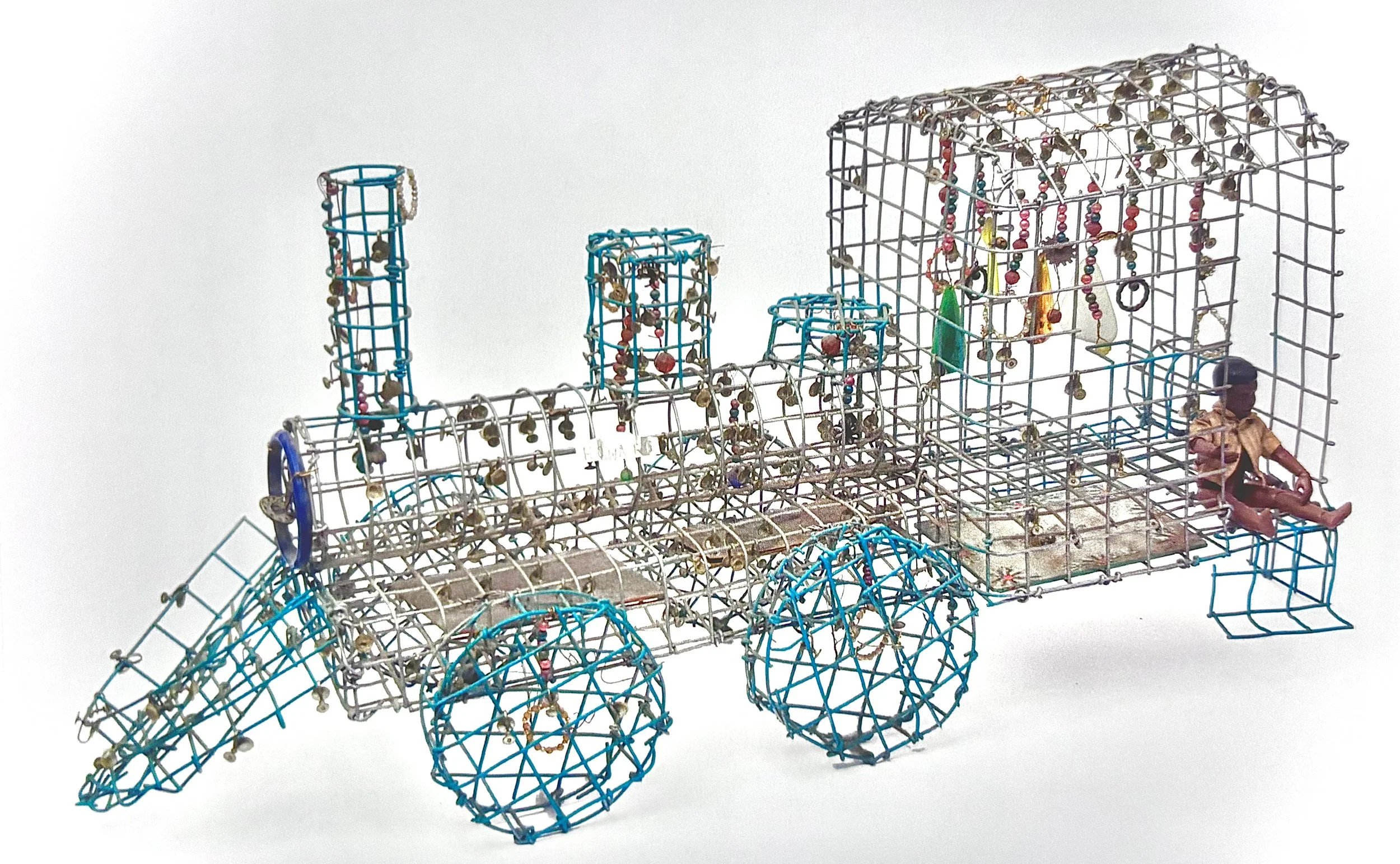
Howard Finster, Wire Train, metal, wire, paint, beads, plastic toys, 14.5 x 30.25 x 11.5 in
Jennifer: Are your children really interested in this art?
Jill: They like it, but they're not actively buying it. They have pieces we have given them, but they are not collectors and don’t have the bug.
Sheldon: All the art that we own, on our death, is committed to a Foundation in our name, and it would be the Foundation that packages it up. Matt Lucash from Fleisher Ollman knows our collection well and has helped to document it all thoroughly. We keep him busy! There are already a lot of pledges underneath the Foundation.
Jennifer: Anything final you think we haven’t covered?
Sheldon: Let me ask you a question, who do you consider to be the important collectors of this material?
Jennifer: Oof! That's a tough question. We will discuss that later together!
Jill: You know, I think that we regard the art of these people as important as, you know, we have Anselm Kiefer hanging with them. If you have some contemporary artists works, I doubt that you would do floor to ceiling hanging, and I think it degrades it a bit when there is so much together, as you aren’t looking at it as a single piece of art.
Sheldon: Yes, it’s then hard to appreciate each individual piece otherwise.
Jennifer: Well, thank you so much. I really appreciate your time to answer my questions.
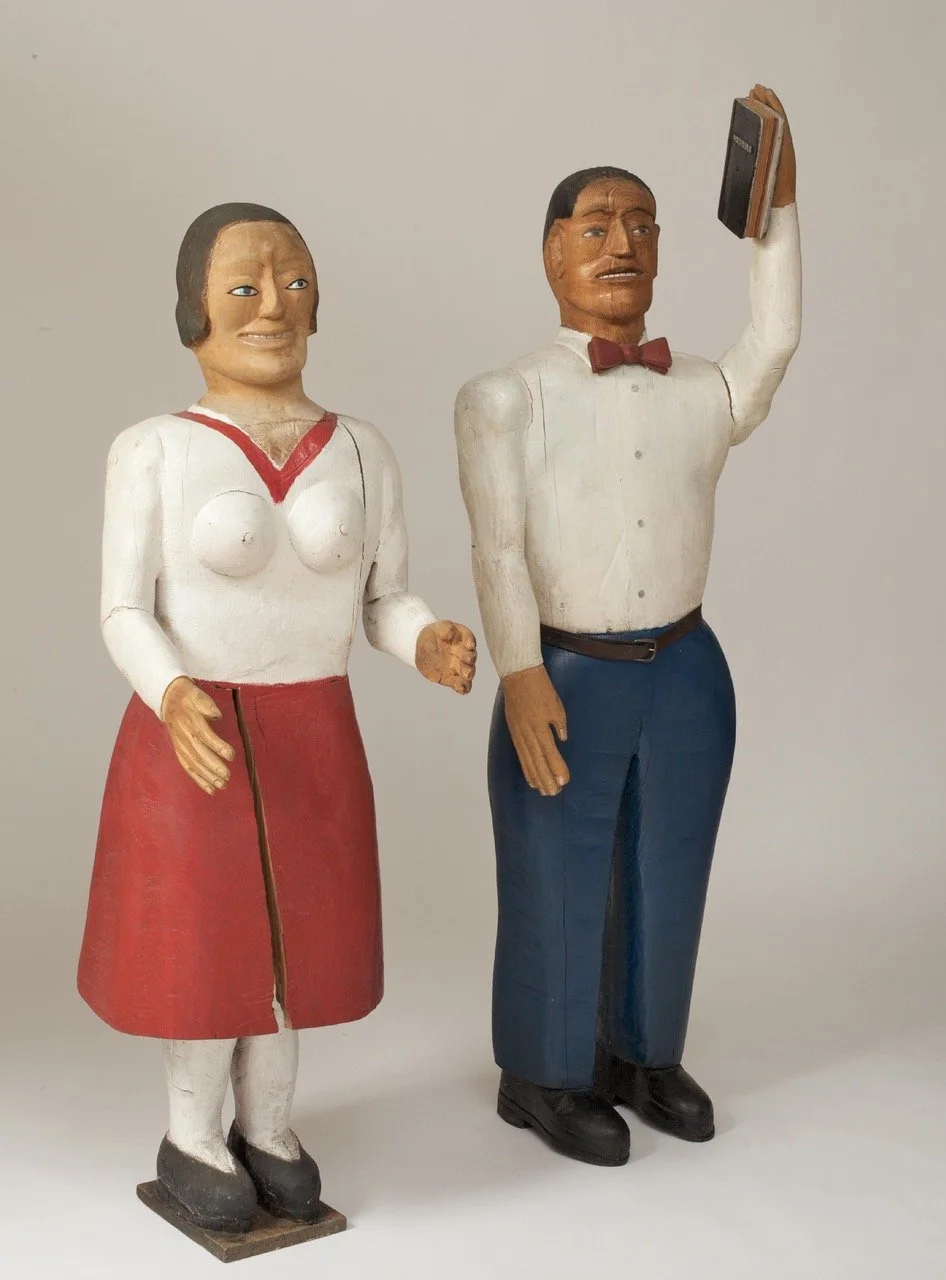
SL Jones - These figures greet you as you enter the Bonovitz’s house in Philadelphia